ZF Factory Audemars Piguet Royal Oak 15500 Top-Quality CollectWatch
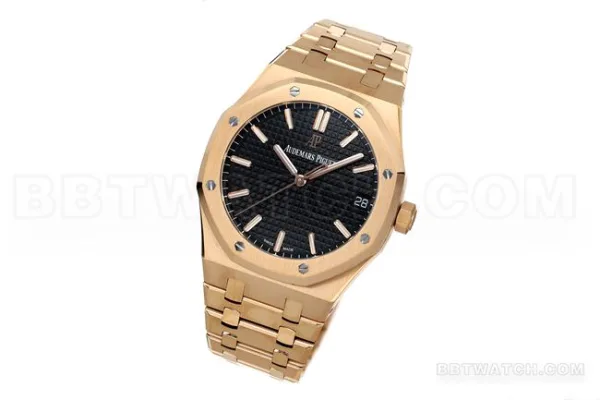
First introduced in 1972, the octagonal bezel redefined the concept of luxury sports watches with its revolutionary design language. Within this legendary product line, the 15500OR.OO.1220OR.01—featuring a full rose gold case paired with a black ‘Grande Tapisserie’ patterned dial—is undoubtedly a strong contender for the title of the contemporary ‘King of Steel’. The Collectversion launched by ZF Factory this time—from moulds created by dismantling the genuine article to a newly developed integrated movement—aims to address the numerous shortcomings of previous Collect. This is not a mere upgrade, but a comprehensive evolution from appearance to core functionality, ensuring the ‘Steel King’ is now without weakness.
Case finishing: a bold, masculine aesthetic with sharp, defined edges
The fundamental reason why the Audemars Piguet Royal Oak is widely regarded as one of the most difficult watches to replicate lies in the extreme complexity of its case finishing techniques. The genuine case exhibits a ‘sharp-edged, resolute and bold’ visual character, achieved through the exquisite combination of three distinct finishing techniques applied to a single case. For this version, ZF Factory has dissected the genuine watch to create moulds for every detail of the case; this means that the original data for the moulds comes directly from 3D scans of genuine components, rather than relying on reverse engineering based on photographs.
Top-quality Collectwatch ZF Factory Royal OakThe front of the bezel features a circular brushed finish, with the brushed lines radiating outwards in concentric circles from the centre of the dial. This brushing technique requires the sandpaper to remain absolutely level and stable whilst rotating; even the slightest tremor would leave visible imperfections on the bezel’s surface. The eight chamfered edges of the bezel have been mirror-polished, with the width of the polished area precisely controlled at 0.6 millimetres; the boundary with the brushed surface is clear and sharp, without the blurred transitions or overspill commonly seen. The main body of the case middle features vertical brushing, whilst the triangular facets on the sides of the lugs have been individually mirror-polished—one of the most recognisable design elements of the Royal Oak Collection. The triangular chamfer reproduced by ZF Factory has an angle of 72 degrees, with the width of the polished surface tapering gradually from 1.2 millimetres at the base of the lugs to 0.6 millimetres at the tips, creating a precise gradient effect.
Bracelet and Buckle: The Secret to Adjusting the Tightness of a Buffer Strap
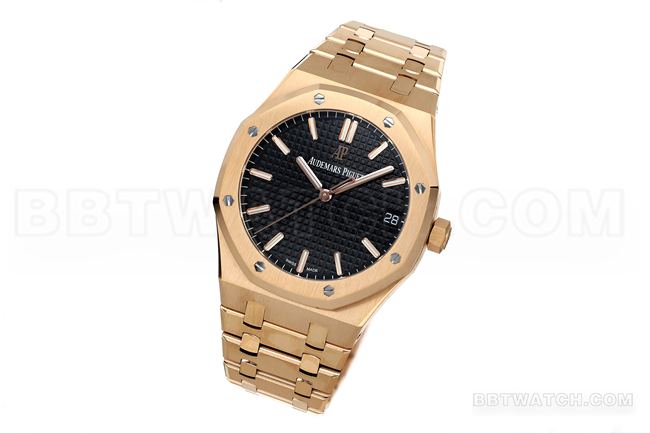
The steel bracelet is often the part of a Collectwatch that is most likely to give it away, as every joint on a genuine steel bracelet has been precisely calculated. The ZF Factory has now claimed that ‘the craftsmanship of the steel bracelet is impeccable, surpassing that of any other steel-bracelet watch on the market’; this claim needs to be verified from several angles. Firstly, the structure of the steel bracelet: the Royal Oak series features H-shaped links that taper gradually, with the links closest to the case measuring 26 millimetres in width, tapering progressively to 18 millimetres near the clasp. ZF Factory’s Collectof this gradual transition involves six distinct changes in width, with the length and angle of each transition matching those of the genuine article exactly.

Of even greater importance is the ‘buffer zone’ design between the clasp and the watch case. This buffer zone refers to the minute gap and damping mechanism between the clasp and the first link of the bracelet. If this area is too loose, the entire bracelet will feel slack; if it is too tight, the bracelet’s range of movement will be restricted, preventing it from naturally conforming to the curve of the wrist when worn. ZF Factory has achieved a level of tightness in this area that is identical to the original – the buckle is recessed into the case to a depth of 2.2 millimetres, and the clearance between it and the inner wall of the case is controlled to within 0.05 millimetres. This ensures a secure connection whilst allowing the bracelet approximately 15 degrees of movement in the vertical direction.
| Watch strap components | Width dimensions | Polishing process | Key Features |
|---|---|---|---|
| First Link | 26.0mm | Vertical brushing + edge polishing | Buffer zone gap: 0.05 mm |
| Second Link | 24.5mm | Vertical drawing | Chamfer width: 0.5 mm |
| The Third Link | 23.0mm | Vertical drawing | Chamfer width: 0.4 mm |
| The Fourth Link | 21.5mm | Vertical drawing | Chamfer width: 0.3 mm |
| The Fifth Link | 20.0mm | Vertical drawing | Chamfer width: 0.2 mm |
| The Sixth Link | 18.0mm | Vertical drawing | Chamfer width: 0.15 mm |
The buckle features a double-push butterfly clasp mechanism. The pushers are 1.8 millimetres high, with a travel of 0.8 millimetres; they offer a crisp, smooth action without any stiffness. The ‘AP’ lettering and brand logo on the inner side of the clasp are created using a combination of laser engraving and chemical etching; the lettering is 0.15 millimetres deep, with sharp edges and no burrs. The clasp features three micro-adjustment holes, each providing approximately 3 millimetres of adjustment, allowing it to accommodate changes in wrist size across different seasons.
Dial Craftsmanship: A Three-Dimensional Revolution in Biscuit Texture
The ‘Grande Tapisserie’ pattern is the most iconic visual feature of the Royal Oak Collection. The official name of this pattern translates literally as ‘Grand Tapestry’, but as it resembles the raised texture on the surface of a biscuit, watch enthusiasts commonly refer to it as the ‘biscuit pattern’. ZF Factory claims that the biscuit texture on the dial of this latest version is ‘three-dimensional, full-bodied and vibrant’, a result of a major breakthrough in craftsmanship. On the genuine watch, the checkered pattern is created by a specialised engraving machine, which cuts each square individually into a brass base plate. Each square is a recessed square, with the four sides forming 45-degree bevels, and the squares are separated by vertical walls approximately 0.3 millimetres wide. There is also an extremely small raised dot at the centre of the bottom of each square, a feature naturally formed as the cutting tool retracts.

The challenge for ZF Factory in reproducing this texture lies in simultaneously controlling the dimensional accuracy of the squares, the consistency of the bevel angles, and the density of the square array. Following disassembly and measurement, it was found that the genuine dial features approximately 64 squares per square centimetre, with each square measuring approximately 1.1 millimetres on each side and a wall width of 0.28 millimetres between the squares. Using custom-made engraving tools and a five-axis CNC machining centre, ZF Factory has successfully replicated these parameters on the dial. The dial is blue, but not a single shade—the blue on the sloping surfaces of the squares is lighter, the blue at the base of the squares is darker, and the blue on the sides of the squares lies between the two. This multi-layered blue effect is achieved through the control of current density during the electroplating process, depositing metal plating of varying thicknesses on different parts of the squares, thereby creating variations in shade.
The widening of the hour markers is a significant design change in the 15500 series compared to its predecessor, the 15400. The hour markers reproduced by ZF Factory measure 1.8 millimetres in width, nearly 30 per cent wider than the 1.4 millimetres of the 15400. This not only enhances the clarity of time-reading but also lends the dial a fuller, more striking visual presence. The minute markers have been moved to the satin-finished outer ring of the dial; this change renders the chequered pattern in the centre of the dial purer and creates a more open visual effect. Both the hour markers and hands are filled with Super-LumiNova X1-grade luminescent material, achieving an initial brightness of up to 250 millicandelas per square metre when exposed to strong light, with a sustained glow lasting approximately six hours.
Dimensions and Construction: The Golden Ratio at 41 millimetres
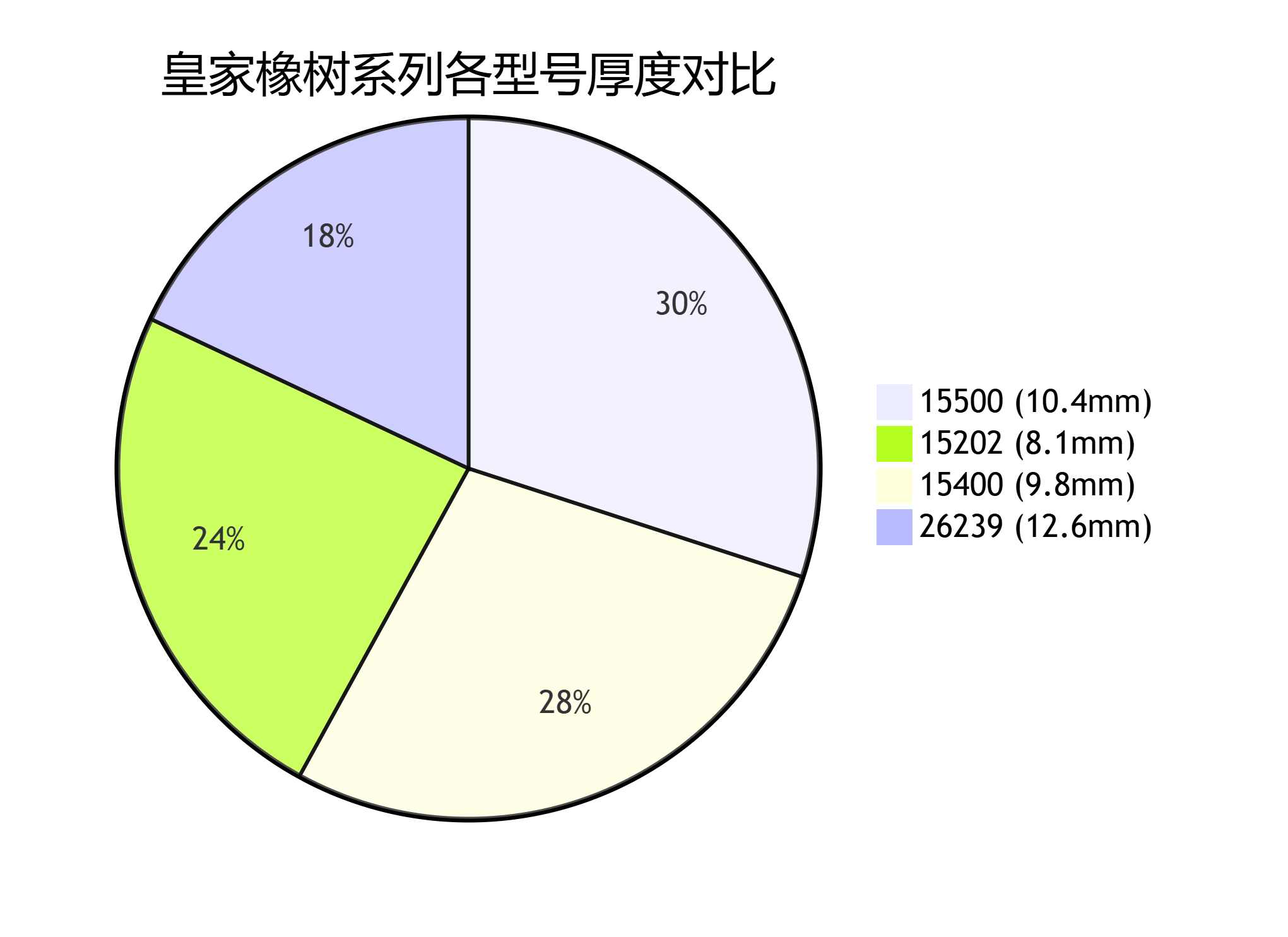
The comfort of a wristwatch depends largely on how well the proportions of the case align with ergonomic principles. ZF Factory has achieved a precise Collectof a 41-millimetre diameter and a thickness of 10.4 millimetres; these dimensions are considered the golden ratio for sports watches—the 41-millimetre case diameter suits the wrist circumference of the vast majority of Asian men, whilst the slim 10.4-millimetre thickness ensures the watch slips effortlessly into a shirt cuff without creating any noticeable bulge.
In terms of structural design, the 15500 case features a three-piece construction—the bezel, middle case and case back are secured together by eight hexagonal screws. The ingenuity of this design lies in the fact that the screws not only serve a functional purpose but also form a central element of the bezel’s visual aesthetic. The eight screws reproduced by ZF Factory feature hexagonal grooves 0.35 millimetres deep, with a 0.1-millimetre chamfer on the edges, ensuring that a screwdriver can grip them securely without slipping. The flat surfaces of the screw heads have been mirror-polished, creating a textural contrast with the brushed finish of the bezel. The sides of the middle case feature a vertical brushed finish, with the direction of the brushed lines running parallel to the case’s axis. The depth of each brushed line is controlled to approximately 0.008 millimetres, creating a continuous yet understated reflection of light as it passes over the surface.
CAL.4302 Integrated Movement: A Comprehensive Evolution from Design to Functionality
The movement is the greatest technical highlight of this version from ZF Factory. Previously, most CollectAudemars Piguet 15500 models utilised the 9015 movement with decorative plates; whilst these could pass for the genuine article in appearance, issues such as the calendar failing to instant-jump, the balance wheel position not matching the original, and the movement being too thick persisted. The all-new CAL.4302 integrated movement developed by ZF Factory has fundamentally resolved these issues. The term ‘integrated movement’ refers to the fact that the movement’s core structures—including the main plate, gear train layout and balance wheel position—have been redeveloped in accordance with the design of the genuine CAL.4302 movement, rather than simply adding decorative plates to an existing standard movement.

In terms of structural fidelity, the positioning of each component in this movement is identical to that of the original. The balance wheel is situated at the 7 o’clock position on the movement—a key feature that distinguishes the CAL.4302 movement from others, as the balance wheel in most automatic movements is typically positioned at the 6 or 12 o’clock position. The balance wheel employs a weight-adjustment mechanism, with eight fine-adjustment screws fitted to its rim. By adjusting the counterweights on these screws, the balance wheel’s moment of inertia can be altered, thereby enabling precise calibration of the rate. The movement’s rotor is another noteworthy feature—the ZF Factory version matches the colour of the genuine article, making it the only one of its kind on the market. Standard versions often have a reddish tint, whereas ZF Factory has adjusted the alloy composition of the plating to reproduce the genuine model’s unique hue, which lies between rose gold and red gold. The AP crest engraved at the centre of the rotor is crafted using a three-dimensional relief technique, with the strokes of the letters ‘A’ and ‘P’ reaching a depth of 0.25 millimetres and the spacing between them precisely controlled at 0.15 millimetres.
The calendar function features an instant-jump mechanism, which is a key distinguishing feature between high-end and low-end movements. In traditional slow-advance calendar mechanisms, the calendar wheel teeth rotate slowly between 10 pm and midnight, taking approximately two hours to complete the date change. In contrast, the instant-jump mechanism stores the energy required for the calendar change in a spring, which is released instantaneously at midnight, allowing the calendar digits to change within 1/20 of a second. The instant-jump function on the ZF Factory version operates crisply and decisively; the numerals in the date window do not exhibit any sluggish or dragging motion during the jump.
Overall Value and Market Positioning
This ZF Factory Collectof the 15500OR, from the case dimensions to the bracelet’s cushion-shaped links, and from the biscuit-textured dial to the integrated movement, demonstrates in every detail the manufacturer’s in-depth study of this classic timepiece. In the Collectwatch market, it is rare to find a product that achieves such a high standard in both aesthetic detail and movement functionality. For watch enthusiasts who adore the Royal Oak’s design language and appreciate the aesthetics of the octagonal bezel pioneered by the master Gerald Genta, yet are currently unable to afford the genuine article, this ZF Factory piece offers an extremely attractive alternative. Whilst the title of ‘Steel King’ may be a matter of debate, the assessment that ‘the Steel King no longer has any weaknesses’ is powerfully vindicated by this product.